


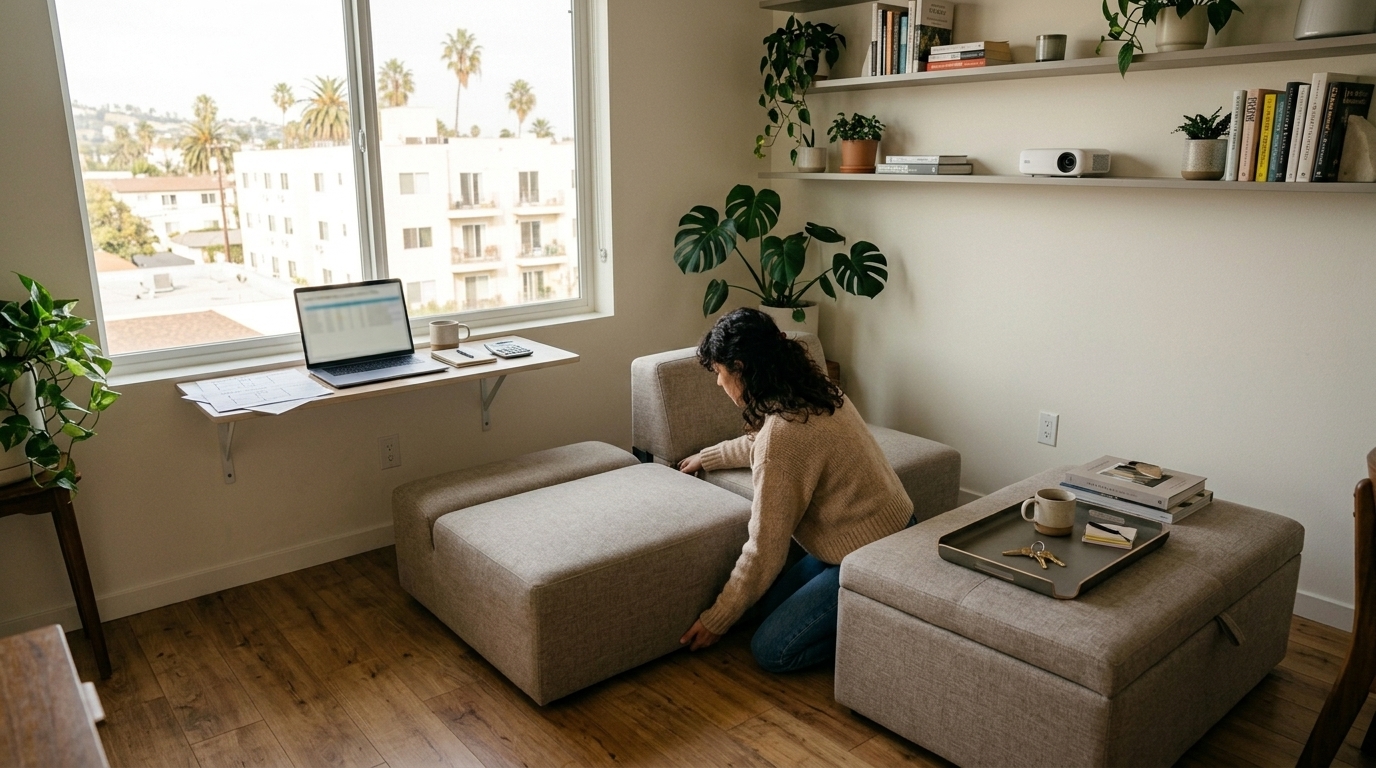
Setting up an apartment in West LA is exciting, especially when you get to make the space feel like your own.
But even a well-designed apartment can start to feel cramped if the furniture is too bulky, too single-purpose, or too hard to move around. The right furniture can help maximize space, protect floor space, and make every square foot feel more useful.
For renters comparing contemporary rental spaces in Westwood, small layout choices can make a big difference. A smart furniture plan can help an apartment feel bigger without making it feel empty or unfinished.
Quick List: What Are the Best Space-Saving Furniture Pieces for an Apartment?
The best space-saving furniture ideas for an apartment include storage beds, modular sofas, storage ottomans, vertical shelves, and extendable tables or mobile kitchen carts. These pieces help renters save space by combining storage, seating, work surfaces, and flexibility in one item. The right furniture should fit the square footage, support daily routines, and leave enough room to walk comfortably. In small spaces, furniture works best when it does double duty without adding clutter.
The Golden Rule: Measure Your Layout Before Buying
Before buying any piece of furniture, measure the room first.
A sofa, desk, dining table, or dresser may look perfect online, but it only works if you can move around it comfortably. Smart furniture should open up your home, not make daily movement harder.
A helpful rule is to leave at least 2 to 3 feet of clear walking space in major paths. This matters near the bed, sofa, entryway, kitchen area, and desk.
Before ordering furniture, check:
- Door clearance: Make sure the item can fit through doors, hallways, and elevators.
- Walkway space: Leave enough room to move without squeezing past corners.
- Furniture depth: Watch for pieces that extend farther than expected.
- Drawer clearance: Make sure drawers can open fully without hitting another item.
- Lease-friendly setup: Check community guidelines before installing heavy wall-mounted pieces.
Wall beds, large shelves, and mounted storage can be useful, but some options require drilling or wall support. Renters should review community policies first and consider freestanding alternatives when needed.
1. Choose a Storage Bed for Hidden Bedroom Organization
A bed usually takes up the most floor space in a bedroom, so it should work harder.
A storage bed can help hide extra linens, seasonal clothing, luggage, shoes, or school supplies without adding another large dresser. This is especially helpful in a small apartment or studio apartment where every square foot matters.
Popular storage bed options include:
- Drawer beds: Built-in drawers slide out from the frame and reduce the need for extra storage.
- Lift-up beds: A hydraulic base lifts the mattress to reveal hidden storage underneath.
- Platform beds: Some designs include shelves, drawers, or built-in cubbies.
- Storage headboards: These can hold books, chargers, and small daily items.
A storage bed can also help create space for a desk or workspace. That extra room can be useful for studying, working from home, or setting up a quiet corner near the window.
When comparing layouts and everyday features, renters can also review floor plans and community amenities to understand how their furniture choices may fit the space.
2. Use a Modular Sofa for Flexible Seating
A fixed sectional can feel comfortable, but it may not always fit a small living room well.
Modular furniture gives renters more flexibility. A modular sofa can be rearranged for movie nights, study sessions, or casual gatherings. It can also be moved more easily than one oversized piece.
This is useful for renters who want one living area to support several routines.
A modular sofa can help with:
- Daily lounging: Keep the layout simple for relaxing after class or work.
- Group projects: Rearrange pieces when classmates come over to study.
- Weekend hosting: Create more seating without permanently crowding the room.
- Small spaces: Move sections around when you need more floor space.
- Studio apartment layouts: Use the sofa to create a soft divide between sleeping and living zones.
In Westwood, where home can double as a study space, social space, and rest space, flexible seating can make the apartment feel more practical.
After arranging your space, nearby local plans can also shape how you use your home base. This guide to things to do in Westwood Village can help renters think about daily routines beyond the apartment.
3. Add a Storage Ottoman That Works Double Duty
A storage ottoman is one of the easiest ways to save space in a small living room.
It can replace a traditional coffee table while adding hidden storage. It can also work as a footrest, extra seating, or a soft surface for a tray.
A storage ottoman works double duty because it can hold:
- Blankets: Keep throws nearby without leaving them on the sofa.
- Remotes and chargers: Hide small clutter in one easy spot.
- Books or notebooks: Store study materials when they are not in use.
- Guest items: Use it as flexible seating when friends visit.
- Daily essentials: Keep the room tidy without adding more shelves.
To make it more practical, place a flat wooden tray on top. This gives you a stable surface for drinks, snacks, or a laptop without needing a bulky coffee table.
For renters who want a stylish but practical living area, a storage ottoman is simple, flexible, and renter-friendly.
4. Go Vertical With Tall Bookcases and Shelving
When floor space is limited, look up.
Tall shelving can save space because it uses wall height instead of spreading storage across the room. A slim bookcase, ladder shelf, or tiered shelving unit can hold books, decor, plants, baskets, and school supplies without crowding the floor.
Renters should be careful with wall-mounted storage. Some shelves require drilling, anchors, or heavier installation. Before mounting anything, check the lease or community policy.
Lease-friendly alternatives include:
- Freestanding ladder shelves: Easy to move and usually do not need wall damage.
- Slim bookcases: Useful for books, baskets, and decor.
- Stackable bins: Helpful inside closets or under desks.
- Over-door storage: Works well for shoes, bags, or accessories.
- Rolling storage drawers: Useful near a desk or bed.
This approach is especially helpful for students and renters near UCLA who need room for books, supplies, tech, and everyday items. For more apartment search context, this guide to finding an apartment near UCLA can help renters think through layout, budget, and space needs together.
5. Pick an Extendable Dining Table or Mobile Kitchen Cart
A dining table can be useful, but it should not take over the room.
An extendable table, drop-leaf table, nesting table set, or rolling kitchen cart can give renters extra surface space only when they need it. This is helpful for meals, laptop work, meal prep, and small gatherings.
Space-saving options include:
- Drop-leaf dining table: Folds down when not in use.
- Extendable table: Expands for guests and shrinks for daily routines.
- Nesting tables: Slide together when you need more floor space.
- Mobile kitchen cart: Adds prep space, storage, and flexibility.
- Foldable chairs: Store easily when extra seating is not needed.
A rolling kitchen cart can be especially useful because it can work as a prep surface, coffee station, storage piece, or serving area. When dinner is done, it can move neatly into a corner.
Renters who enjoy the Westwood lifestyle may also want a flexible layout that works before and after a day out. This guide to living in Westwood Village can help connect apartment setup with local routines.
Common Furniture Mistakes That Make Apartments Feel Smaller
Some furniture looks nice in a showroom but feels too heavy at home.
The goal is not to avoid furniture. The goal is to choose the right furniture for the space, layout, and daily routine.
Common mistakes include:
- Choosing low, solid-to-the-floor furniture: Pieces with no visible legs can block light and make a room feel heavier.
- Buying single-purpose items: A table, bench, or cabinet that does only one thing may not earn its space.
- Ignoring walkway clearance: A room feels smaller when renters have to squeeze around furniture.
- Choosing bulky dining chairs: Heavy chairs that do not slide under the table can waste space.
- Overfilling corners: Too many small items can create visual clutter.
- Skipping measurements: Guessing dimensions often leads to pieces that are too deep, wide, or tall.
A small home can feel more open when light moves through the room and furniture has breathing room.
It also helps to balance indoor space with outdoor time. For renters who like getting outside, exploring local green spaces can be part of creating a lifestyle that feels less cramped.
Enjoy Open, Smart Living at Eight70 Apartments
The best space-saving furniture ideas are not about making an apartment feel empty.
They are about choosing furniture that supports real life. A storage bed can control bedroom clutter. A modular sofa can adjust for guests. A storage ottoman can replace a bulky coffee table. Tall shelves can open the floor. A flexible dining table or kitchen cart can help one area do more.
With the right furniture, even a small apartment can feel more organized, comfortable, and personal.
If you are planning your next layout or comparing available spaces, get in touch with our leasing team to ask about current options and apartment details.
Space-Saving Apartment FAQs
How do I keep my apartment living room from feeling crowded?
Choose furniture with slender frames, exposed legs, and built-in storage. Replace bulky single-purpose pieces with multifunctional furniture, such as a storage ottoman or nesting tables.
Are Murphy beds allowed in rental apartments?
Some Murphy beds require heavy wall mounting, drilling, or attachment to studs, which may not match rental rules. Renters should check community policies first and consider freestanding chest beds or sofa beds as damage-free alternatives.
What is the most useful multifunctional furniture piece for a studio apartment?
A storage bed or modular sofa is often useful in a studio apartment because each one supports a major part of daily life. These pieces can combine sleeping, seating, storage, or layout flexibility.
How can I add kitchen counter space without remodeling?
A rolling kitchen cart can add extra prep space without permanent changes. It can also provide storage, a serving surface, or a small coffee station.
How much space should I leave for walkways between furniture?
A good rule is to leave at least 2 to 3 feet of clear walking path between major furniture pieces. This helps the apartment feel open and makes daily movement more comfortable.
Source / Accuracy Note
This guide was created to help renters understand space-saving furniture ideas for an Eight70 apartment using local context, official property information, renter-focused planning, and relevant source references. Rental prices, availability, amenities, floor plans, lease policies, community guidelines, furniture measurements, and local conditions can change, so readers should verify current details before making a decision.