


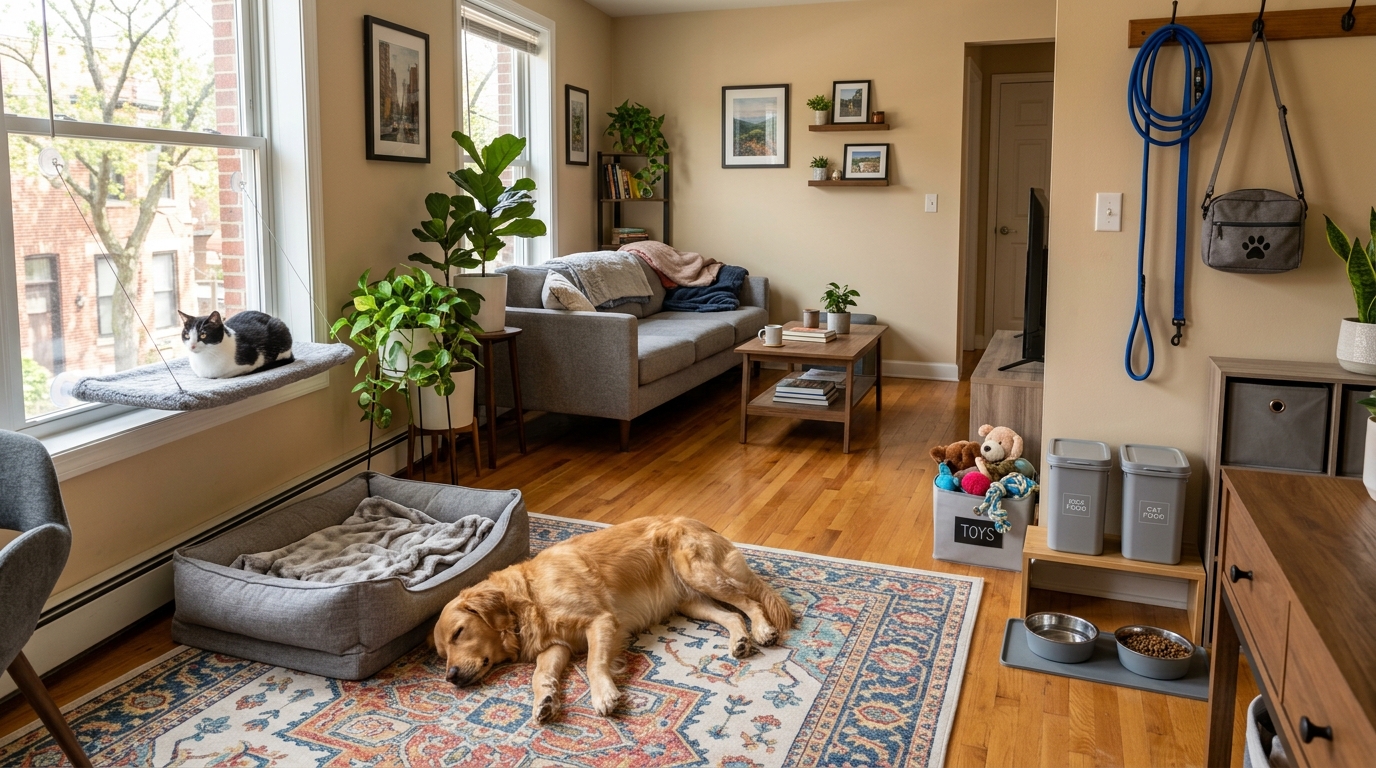
Living in a pet-friendly apartment gives you and your furry friend a place to call home, but a successful setup takes more than choosing a community that permits animals. Space, routines, cleanup, noise, exercise, and current property rules all affect daily apartment living with pets.
Dogs and cats may have different activity, privacy, and bathroom needs. With thoughtful planning, however, you can create a comfortable living space that supports your pet without allowing toys, bedding, and supplies to take over the apartment.
Quick Answer: How Do You Keep Pets Happy in an Apartment?
Keeping your pet happy in an apartment starts with a consistent routine, a comfortable designated space, regular playtime or exercise, and a clean environment. You should also plan bathroom breaks, reduce common noise triggers, provide safe enrichment, and review the apartment’s current pet policy.
The right approach depends on whether you have a dog or cat, along with your pet’s age, activity level, temperament, breed or breed mix, and health needs.
Helpful tips include:
- Set up a quiet sleeping and feeding area.
- Follow predictable feeding and play schedules.
- Provide safe toys and mental enrichment.
- Plan exercise and bathroom breaks.
- Manage pet hair with a simple cleaning routine.
- Respect hallway, elevator, and common-area rules.
- Confirm current pet costs and restrictions before moving.
Review the eight70 Pet Policy Before Moving In
A pet-friendly apartment may still have rules covering the kind of pet permitted, weight, breed, number of animals, documentation, and costs. Review these details early so you can determine whether the apartment and current policy fit your needs.
The official eight70 website currently states that cats and dogs are permitted, with a maximum of two pets per apartment home. It lists a $500 deposit per pet, $50 in monthly pet rent per pet, a 50-pound weight limit per pet, restrictions on exotic animals, and named breed restrictions. Policies and charges can change, so confirm the latest information directly with the leasing team before applying.
What Does “Pet-Friendly” Actually Mean?
The term pet-friendly means a community permits certain pets under its current rules. It does not automatically mean every animal, size, or breed is accepted.
A pet policy may address:
- Cats, dogs, or other permitted animals
- The maximum number of pets
- Weight and breed restrictions
- Required records or documentation
- Pet deposits and monthly pet rent
- Leash and common-area expectations
- Move-in requirements
A pet-friendly label also does not automatically mean a community has a dog park, pet wash stations, or a dedicated pet area. The current eight70 amenities page does not list those features, so renters should not assume they are available.
Pet Costs to Confirm Before Applying
Make sure you understand the difference between a refundable or condition-based pet deposit and recurring pet rent. Ask whether each cost applies per pet or per apartment and whether the listed amounts are current.
The official site currently identifies a pet deposit and monthly pet rent. Avoid treating every pet-related cost as a general pet fee unless the leasing team confirms an additional charge.
Questions to Ask the Leasing Team
Before choosing an apartment with pets, ask:
- Is the online pet policy current?
- Does my dog or cat meet the requirements?
- Are the deposit and pet rent charged per pet?
- What documentation is required?
- Are there rules for elevators, hallways, and entrances?
- Are any restrictions not shown online?
- Which apartment features are available in the selected home?
Questions involving service or support animals should be directed to the leasing team. Do not assume that ordinary pet rules automatically apply.
Create a Designated Space for Your Pet
A designated space can help your pet feel at home while keeping the apartment organized. It does not need to be a separate room. A quiet corner with a comfortable bed, familiar toys, and nearby storage may be enough.
Choose a location away from loud appliances and heavy foot traffic. Keep clear paths around doors, vents, hallways, and frequently used furniture.
Set Up a Comfortable Bed or Cozy Retreat
Use washable pet bedding in a consistent sleeping location. Familiar blankets or toys may help your furry companion settle after a move.
A crate may provide a cozy retreat for some dogs when it is suitable for the animal and introduced responsibly. It should not be used as a substitute for exercise, attention, or bathroom breaks.
Organize Food, Toys, and Pet Supplies
Store food in sealed containers and keep grooming tools, leashes, waste bags, and toys together. A storage ottoman, lidded basket, or compact cabinet can reduce clutter without blocking the living space.
You can also review these space-saving furniture ideas for your apartment when choosing pet-friendly furniture and multifunctional storage.
Keep food and water separate from litter areas. A washable feeding mat can also make cleanup easier.
Use Vertical Space for Cats
Cats often benefit from safe opportunities to climb, scratch, observe, and rest. Stable cat trees, scratching posts, and secure window perches can add usable space without filling the floor.
Review the lease before installing wall-mounted shelving or making other changes. Enrichment should match the individual cat’s abilities and preferences.
Build a Routine for Playtime, Exercise, and Bathroom Breaks
A consistent schedule can help pets understand when to expect food, playtime, outdoor time, and rest. Try to keep the routine realistic enough to follow on busy workdays or class days.
Exercise and enrichment needs vary. A young, active dog may need a different routine from an older dog, while one cat may enjoy climbing and another may prefer short floor-level play sessions.
Daily Routines for Dogs
Build walks, sniffing time, indoor play, meals, rest, and bathroom breaks into your schedule. Several shorter activities may work better than one long session, depending on your dog’s age, energy level, and health.
Before visiting outdoor activities and green spaces near Westwood, confirm whether pets are allowed. Check current leash rules, hours, weather, parking, and temporary closures.
Outdoor adventures should also account for heat, pavement conditions, and your pet’s comfort.
Indoor Enrichment for Cats
Indoor enrichment may include:
- Short interactive play sessions
- Stable climbing and observation areas
- Scratching posts or pads
- Safe toy rotation
- Food puzzles when appropriate
- Secure window access
- Clean and accessible litter areas
Regular physical and mental activity can help pets engage in natural behaviors, but no single routine works for every animal. Ask a veterinarian about health-specific activity needs.
Plan Around Work, Classes, and Other Commitments
Plan care before long meetings, classes, shifts, or errands. Give your pet an appropriate bathroom break or play session before leaving, and arrange help when you will be away longer than your pet can comfortably manage.
A trusted roommate, friend, dog walker, sitter, or other pet services provider may help when your normal schedule changes.
Choose Pet-Friendly Furniture and Keep the Apartment Clean
Living in an apartment with a pet does not require constant cleaning, but a repeatable system makes maintenance easier.
Choose washable materials and keep basic cleaning supplies ready. Store all products securely so your four-legged friend cannot reach them.
Reduce Pet Hair Without Constant Cleaning
To manage pet hair:
- Use washable throws or furniture covers.
- Brush your pet when appropriate for its coat.
- Vacuum on a realistic schedule.
- Keep a lint roller near the entry.
- Wash pet bedding regularly.
- Clean beneath furniture and around feeding areas.
A washable rug can help protect a high-traffic area, but it should lie flat and remain stable underfoot.
Protect Floors and High-Traffic Areas
Use washable mats near food bowls and entrances. Wipe paws after outdoor time when needed and clean spills or accidents promptly.
The official property site lists several in-home features, but it also explains that features and materials may vary by apartment. Confirm flooring, balconies, patios, and other details for the exact home you are considering.
Store Cleaning Supplies Safely
Choose cleaning products suitable for use around pets and follow the product directions. Keep them in a closed cabinet or secure container rather than beside food, bedding, or toys.
For questions about possible exposure or your pet’s health, contact a veterinarian.
Manage Noise and Shared-Building Etiquette
Pets in apartments share walls, hallways, entrances, and elevators with other residents. Good common-area habits can make daily routines smoother for everyone.
Keep dogs leashed where required, avoid leaving a pet unattended in shared spaces, and give other residents and animals enough room.
Reduce Door, Window, and Hallway Triggers
Notice what causes barking or meowing. Common triggers may include hallway footsteps, deliveries, doors, visitors, or activity outside a window.
Depending on the pet, you may be able to:
- Move bedding away from the entrance.
- Reduce direct views of busy areas.
- Use quiet background sound.
- Reward calm behavior.
- Follow a predictable daily routine.
- Provide playtime before a typically busy period.
These steps may reduce some triggers, but they do not guarantee that excessive barking will stop.
Practice Good Elevator and Hallway Habits
Keep your pet close rather than allowing a leash to stretch across the hallway. Let people exit an elevator before entering and wait for another elevator when the space is too crowded.
Do not assume that every person or animal wants to interact. Some pets need more distance to remain calm.
Know When to Ask for Professional Help
Persistent barking, anxiety, house-soiling, destructive behavior, or other concerns may require support from a veterinarian or qualified animal-behavior professional.
Avoid punishment or unsafe tools. The goal is to understand the cause and find an approach suited to the individual pet.
Plan for Time Away From Home
Pet care should be part of your plans for work, school, meals, errands, and social activities. Consider how long your pet is normally comfortable alone and arrange care when needed.
When planning things to do in Westwood Village, account for travel time and how long you expect to be away.
Create a Backup Pet-Care Plan
Your backup plan can include:
- A primary and secondary caregiver
- Feeding instructions
- Bathroom and walking routines
- Veterinarian-provided medication directions
- Building-access instructions
- Emergency contacts
- The location of food, leashes, carriers, and records
Identify a regular veterinary clinic and emergency animal hospital before you need one. Verify current hours and services rather than relying on an old listing.
Prepare Safe Activities for Time Alone
Depending on your dog or cat, safe activities might include a familiar scratching area, approved food puzzle, secure chew, comfortable bedding, or a small rotation of toys.
Do not leave an unfamiliar or easily damaged toy unattended. Keep fresh water available and remove anything the pet could swallow or become tangled in.
Fit Pet Care Into Everyday Life in Westwood
Apartment living with pets becomes easier when care tasks fit naturally into your regular schedule.
Use a renter’s guide to living in Westwood Village to think about how errands, meals, and neighborhood outings may fit around feeding, play, and bathroom routines.
Plan Short Outdoor Breaks Around Your Schedule
There is no universal number of walks that suits every dog. Plan outdoor time around your pet’s needs, your veterinarian’s guidance, the weather, and your daily responsibilities.
Bring waste bags and water when appropriate. Follow posted property and public-space rules.
Verify Rules Before Visiting Outdoor Spaces
Before you take your pet to a park, trail, or dog park, confirm:
- Whether pets are allowed
- Current leash requirements
- Hours and temporary closures
- Weather and pavement conditions
- Parking or transportation options
- Whether the setting suits your pet
Keep a Small Pet-Ready Bag Near the Door
A pet-ready bag can contain:
- Waste bags
- Leash or harness
- Collapsible water bowl
- Small towel
- Water
- Veterinarian-approved treats
- Identification information
Keeping these items together can make bathroom breaks and short outings less stressful.
Help Your Pet Adjust to a New Apartment
Moving introduces new sounds, smells, rooms, and routines. Some pets adjust quickly, while others need more time.
Prepare a familiar designated space before giving your pet access to the entire apartment.
Prepare Before Moving Day
Before the move:
- Review the current pet policy.
- Organize veterinary and identification records.
- Pack familiar bowls, bedding, food, and toys.
- Prepare a carrier, leash, or harness.
- Confirm feeding and medication schedules.
- Identify a veterinarian and backup caregiver.
- Keep cleaning supplies accessible but secure.
Keep the First Few Days Calm and Predictable
Maintain familiar feeding, bathroom, play, and rest routines when possible. Introduce new rooms gradually if your pet seems overwhelmed.
Supervise access to doors, windows, balconies, and patios. Confirm that screens and barriers are secure and permitted.
Keeping routines familiar and providing a quiet area may help during a move, but adjustment can take days, weeks, or longer depending on the animal.
Watch for Signs That Guidance May Be Needed
Contact a veterinarian if your pet shows ongoing changes in appetite, bathroom habits, behavior, or general condition.
A qualified behavior professional may also help with persistent adjustment or anxiety concerns.
Is Pet-Friendly Apartment Living at eight70 Right for You?
Living in a pet-friendly apartment works best when the community’s policy and your pet-care routine fit together.
Before deciding, consider:
- Whether your pet meets the current requirements
- Whether the apartment layout supports its routine
- How you will manage exercise and bathroom breaks
- How you will control pet hair and cleanup
- Who will provide care during longer days
- Whether the deposit and pet rent fit your budget
- Whether you have confirmed current rules with leasing
Renters comparing their options can explore apartment living at eight70 in Westwood and contact the leasing team to confirm current pet policies, available layouts, apartment features, and community details.
Frequently Asked Questions About Pet-Friendly Apartment Living
Are Cats and Dogs Allowed at eight70 Apartments?
The current official policy allows cats and dogs, subject to the maximum number of pets, weight limit, breed restrictions, documentation requirements, and other community rules. Confirm the latest policy with the leasing team before applying.
How Many Pets Can Live in an eight70 Apartment?
The current online policy lists a maximum of two pets per apartment home. Pet rules can change, so verify the limit and all related requirements directly with the leasing team.
How Can I Create Enough Space for a Pet in an Apartment?
Create a defined sleeping area, organize food and supplies, keep walkways clear, and use washable materials. Cat owners may also use stable vertical space for climbing, scratching, and resting.
How Can I Keep a Dog or Cat Entertained Indoors?
Use short play sessions, safe toy rotation, appropriate food puzzles, and a consistent routine. Cats may enjoy climbing and scratching options, while dogs may benefit from sniffing games and suitable indoor play.
How Can I Manage Pet Hair in an Apartment?
Use washable furniture covers, brush your pet when appropriate, vacuum regularly, and wash pet bedding. Entry mats and lint rollers can also make daily cleanup easier.
What Can Help With Excessive Barking in an Apartment?
Identify common triggers, maintain a consistent routine, reward calm behavior, and reduce direct views of busy doors or windows when appropriate. Consult a veterinarian or qualified behavior professional if the barking continues.
Source / Accuracy Note
This guide was created to help renters plan for apartment living with pets using renter-focused guidance, current eight70 property details, local context, and available public information.
Pet policies, deposits, monthly pet rent, weight and breed restrictions, documentation requirements, apartment features, outdoor-access rules, local services, and other details can change. Renters should confirm current information with the eight70 leasing team and seek guidance from a veterinarian or qualified animal-care professional for health or behavior concerns.